
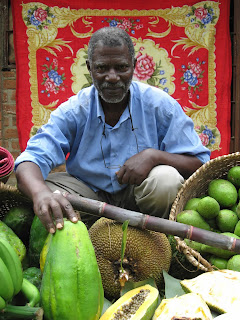
John Ssentongo’s home in Lukindu-Kiwangala, Uganda has been called a Garden of Eden. The fruit is in such abundance that it is literally falling off the trees. Anyone who visits Ssentongo, a key player at Children’s Sure House, is expected to take home with them as many avocados and papayas as they can carry.


While most Ugandans have subdivided and sold off their land, the Ssentongos have been farming the same five acre plot since the 1950s. The homestead is completely self-sustainable. It provides the majority of food for the family. The surplus generates income, feeds the students and teachers at CSH, and supports the diets of his neighbors.
Ssentongo is keenly interested in developing his property into a model farm where members of the community can come to exchange ideas on better agricultural practices. Below is an overview of Ssentongo’s proposal.

The Program
The Home Sustainable Living Approach Program is an initiative of Children’s Sure House to lead homes, the community in its operational area, and Uganda at large to sustainability.
CSH works to create self-sustainability in the country by harnessing the potential of individuals to develop themselves, their households, and their communities. CSH partners with groups at all levels, including local, national, and international organizations, in the developmental process.
Objectives:
1. To improve food security through introducing new techniques of farming and other income generating activities. Income generation schemes are demonstrated to the community to empower them with knowledge and inspire them to create their own projects.
2. To provide consultancy services to community groups and individuals in their efforts to attain socioeconomic development. CSH will carryout and promote research on government programs, development agencies, and civil society programs that influence policy formulation.
3. To offer technical services in the fields of environmental protection, and agricultural development.

Home Sustainability
The Home Sustainability Program is intended to transform homes through farming, environment conservation, income generating activities, and education. The program will be demonstrated in model homes throughout the community.
Farming:
Most homes in Uganda depend entirely on agriculture for food consumption and income. Currently, many families eat only once a day. The meal usually consists solely of matoke, a type of plantain banana, or posho, a cornmeal product. Other vegetables must supplement staple foods to create sufficient nutrition. Better farming methods must be put into place.
Seasonal staple foods and cash crops must grow alongside long life fruit trees such as jackfruits, avocados, papaya, mangoes, and oranges. Homes must be encouraged to grow a nutritional variety of vegetables. Improved breeds of plants and animals must be introduced to farms to stimulate higher production. Organic farming and agroforestry should be applied to preserve the fertility of the environment. Better irrigation systems and affordable methods of water harvesting should be introduced. Produce preservation and value methods should be practiced to completely capitalize on the harvest.
Environmental Conservation:
Human activity has tempered the environment causing harsh climate changes. Steps must be taken to bring back a safer environment. Deforestation has contributed to global warming and soil erosion. New trees must be planted and firewood-saving stoves should be used; use of chemical fertilizers and over grazing should be discouraged.
Home Small Scale Industries and Income Generating Projects:
Daily expenses of basic household items burden homes. If there is knowledge of soap, candle, and cooking oil production, then families will have a better chance of sustaining themselves. If a surplus is created, then the products can bring additional income. To maximize profit, income generating projects will use locally available, raw materials.

Home Sustainability Living Approach Program-
Proposed Demonstration Model Home at Lukindu Kiwangala
Size of the Land: 5 Acres
Agricultural Division of Land:
1. Farmyard: ½ acre. This area is occupied by houses and a compound. The compound will be used for box gardening and other demonstrations that could be used in an urban environment.
2. Coffee and Banana Plantation: 2 acres. Coffee and bananas will be maintained by agro-farming fruit trees such as avocados, jackfruits, and bark-cloth trees. In addition, ten beehives will be kept there.
3. Vegetables and Other Seasonal Crops: 2 acres. Vegetables such as pumpkins, cabbages, carrots, eggplants, green pepper, onions, corn, cassava, sweet potatoes, and other seasonal crops will be grown. Their seeds will be harvested so that the surrounding community can partake in the next planting season.
4. Fish Pond: ½ acre. When construction is completed, local fish will be farmed here.


